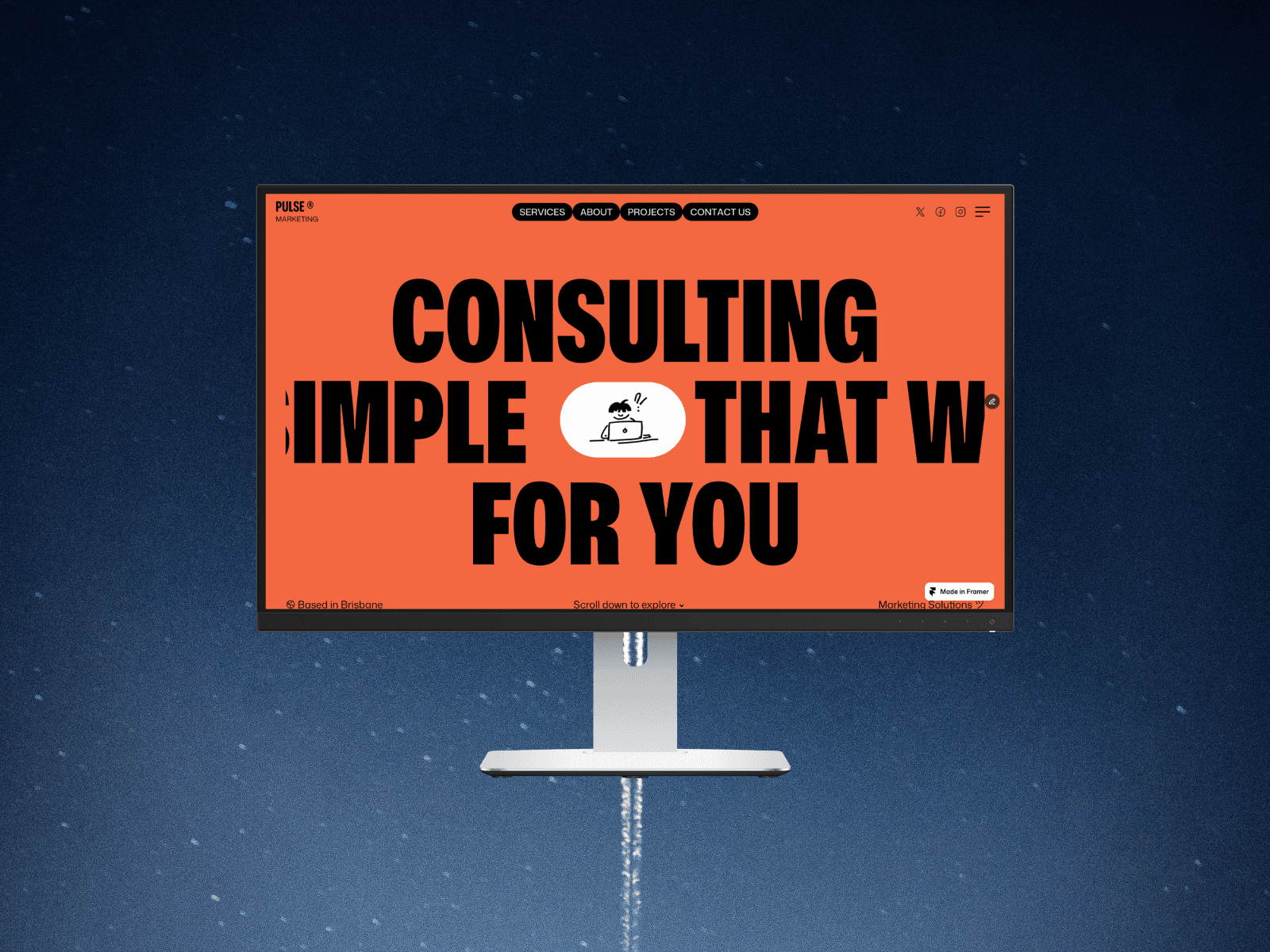
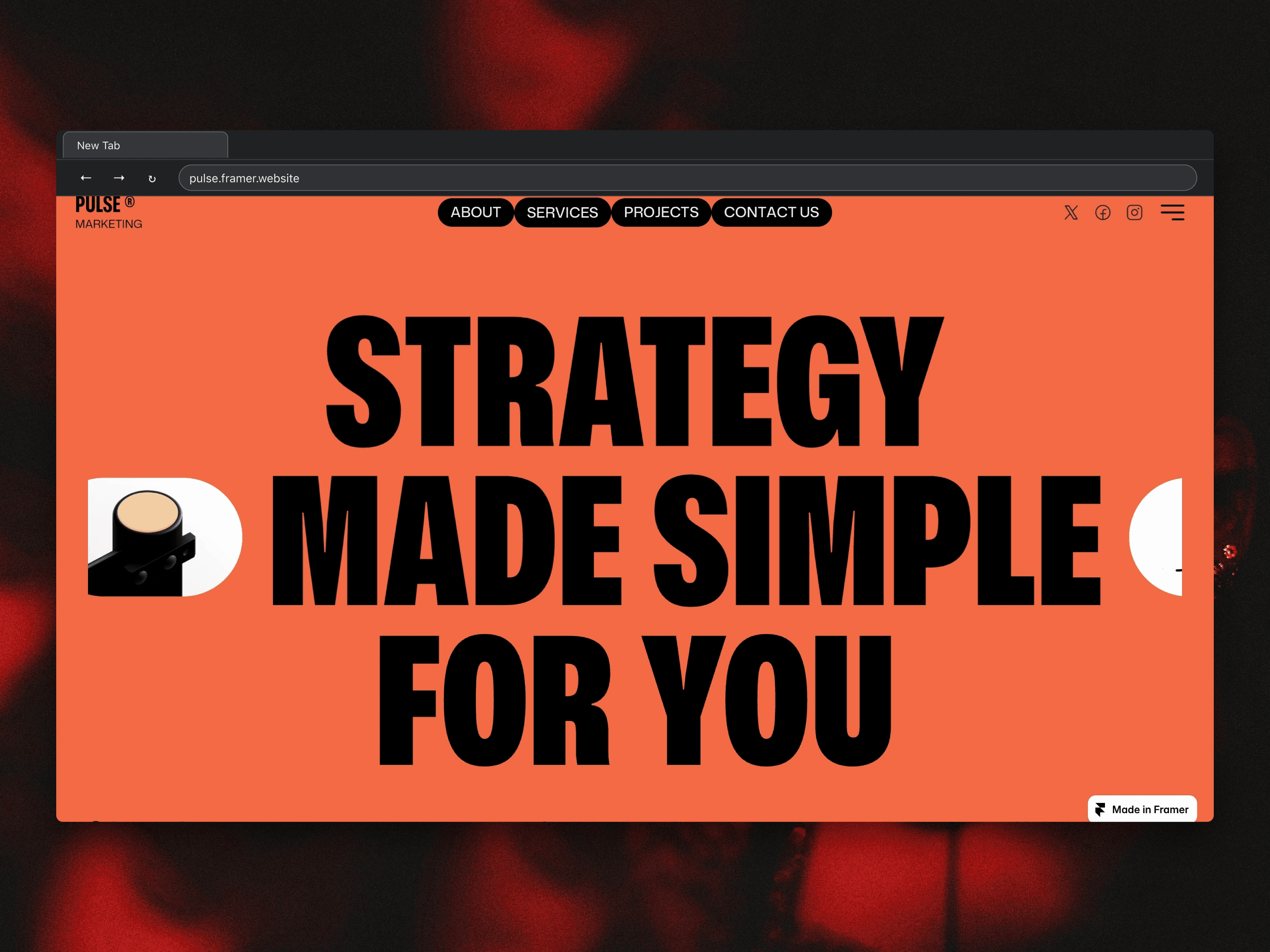
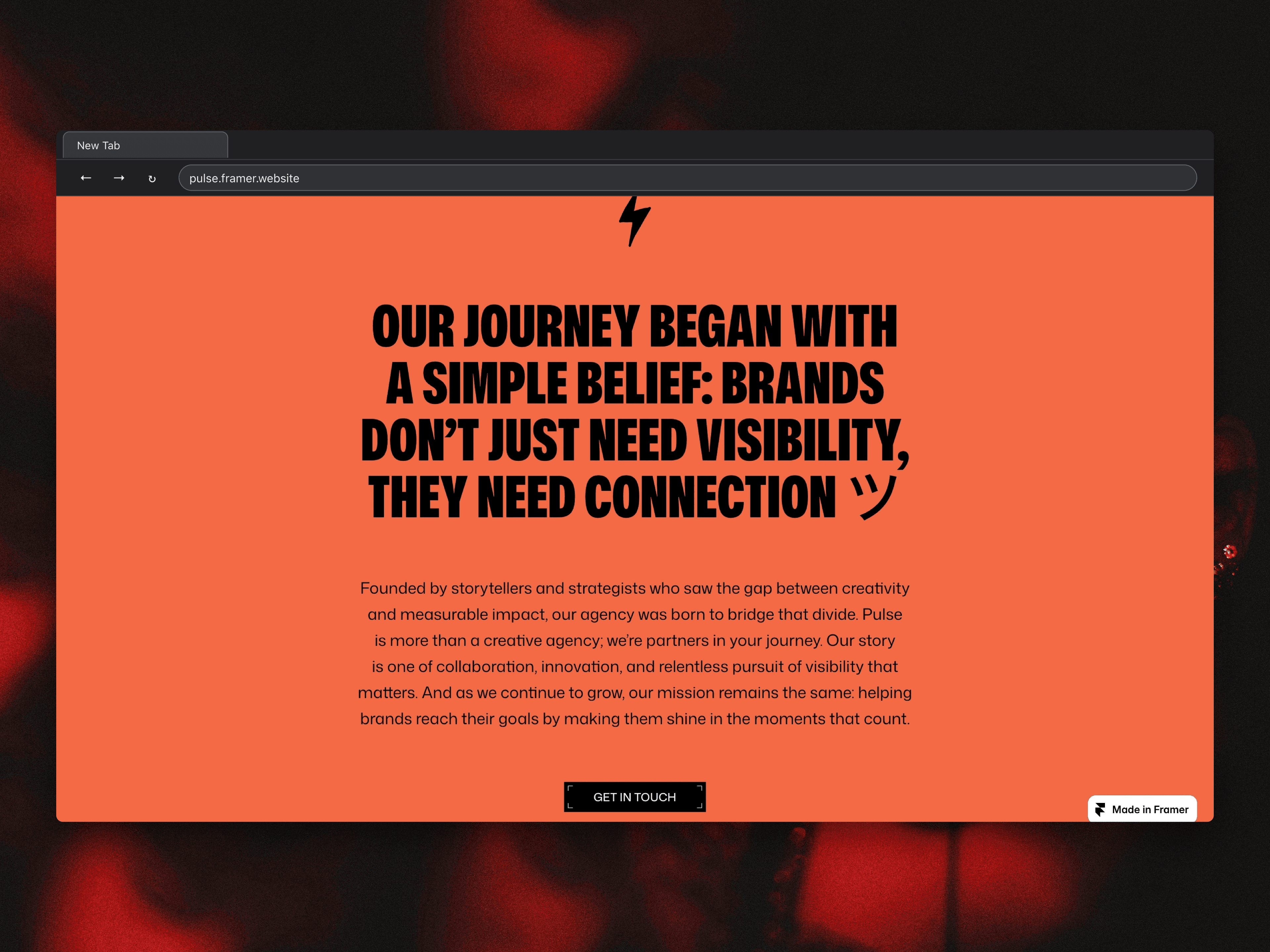
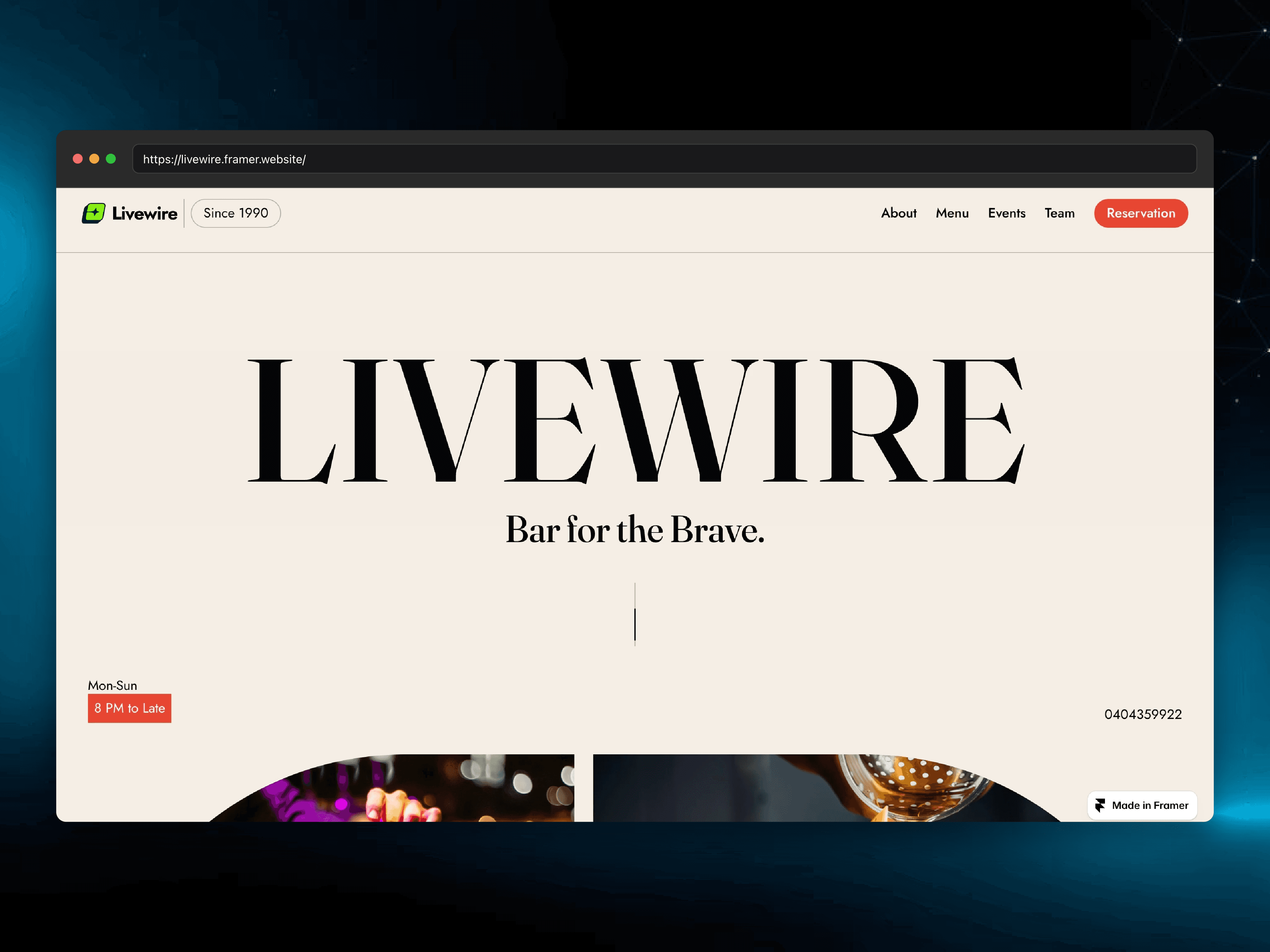
Pulse leads with type. Big type — the kind that takes up most of the viewport and makes you read it before you do anything else. For marketing and creative agencies, that's not a styling choice, it's an argument. Your positioning statement deserves more than a caption.
The 3D effects are classy in the actual sense of the word. Elements shift on scroll, layers separate, depth appears without a loading screen or a WebGL warning. It doesn't feel like a demo reel. It feels like a site that happens to have dimension.
Page transitions carry the whole experience forward. Not flashy cuts — more like a considered pause between rooms. You click, something moves, the next page arrives with weight. After two or three of those, the site has a personality.
Tickers run through the template where they should. A scrolling client list. A looping service line. A moving headline that keeps the page from going static between sections. They signal premium without announcing it.
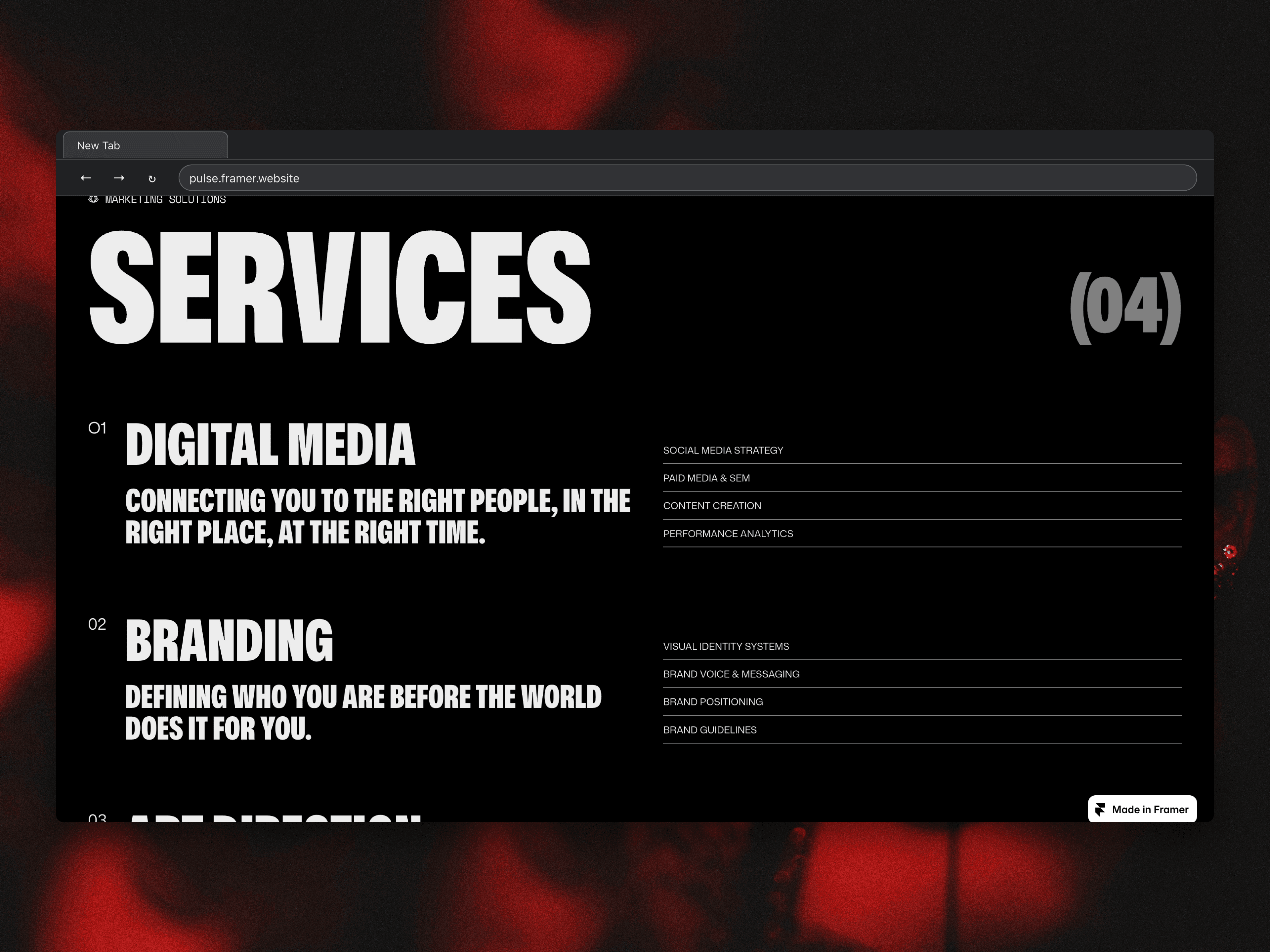
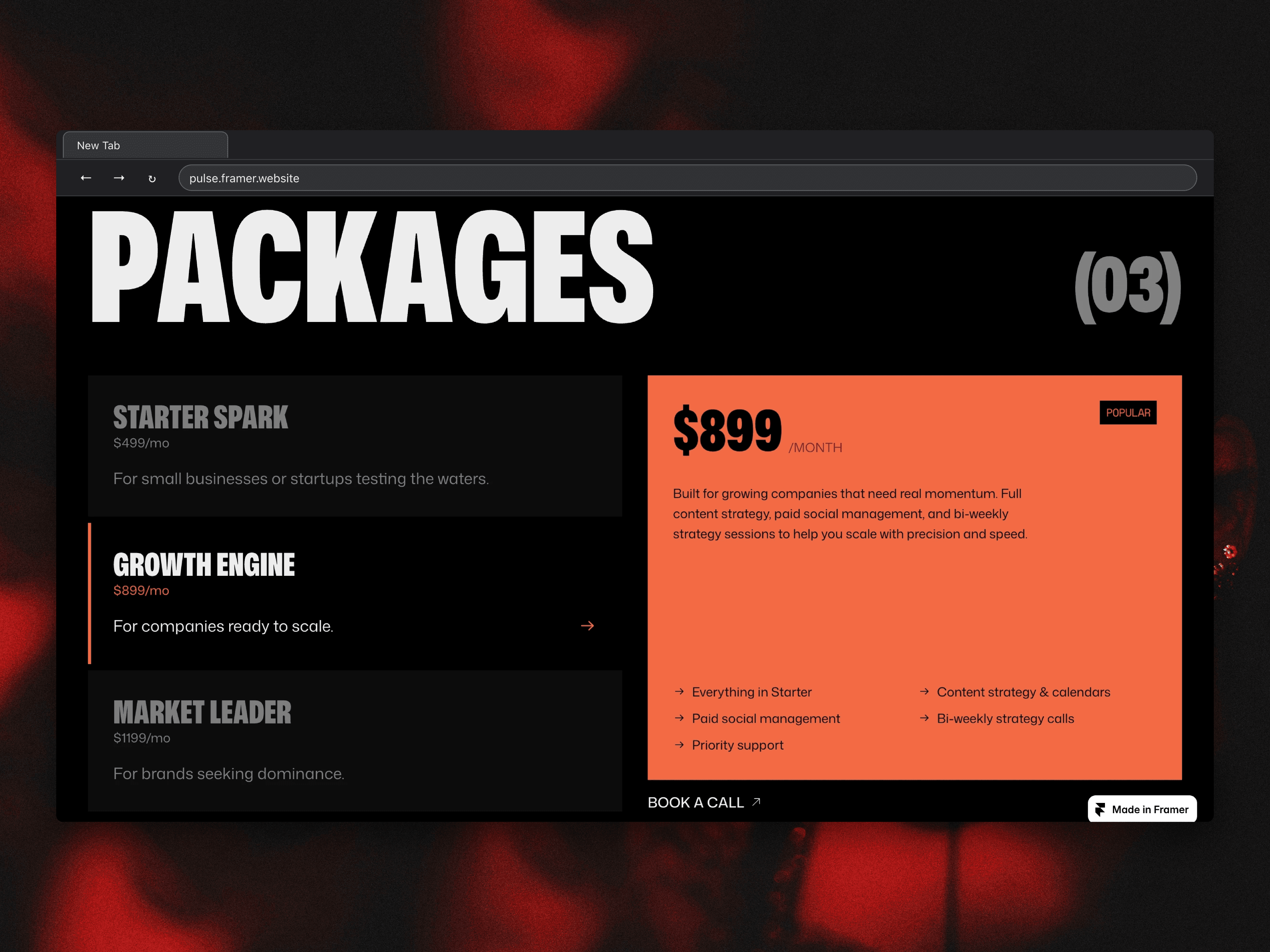
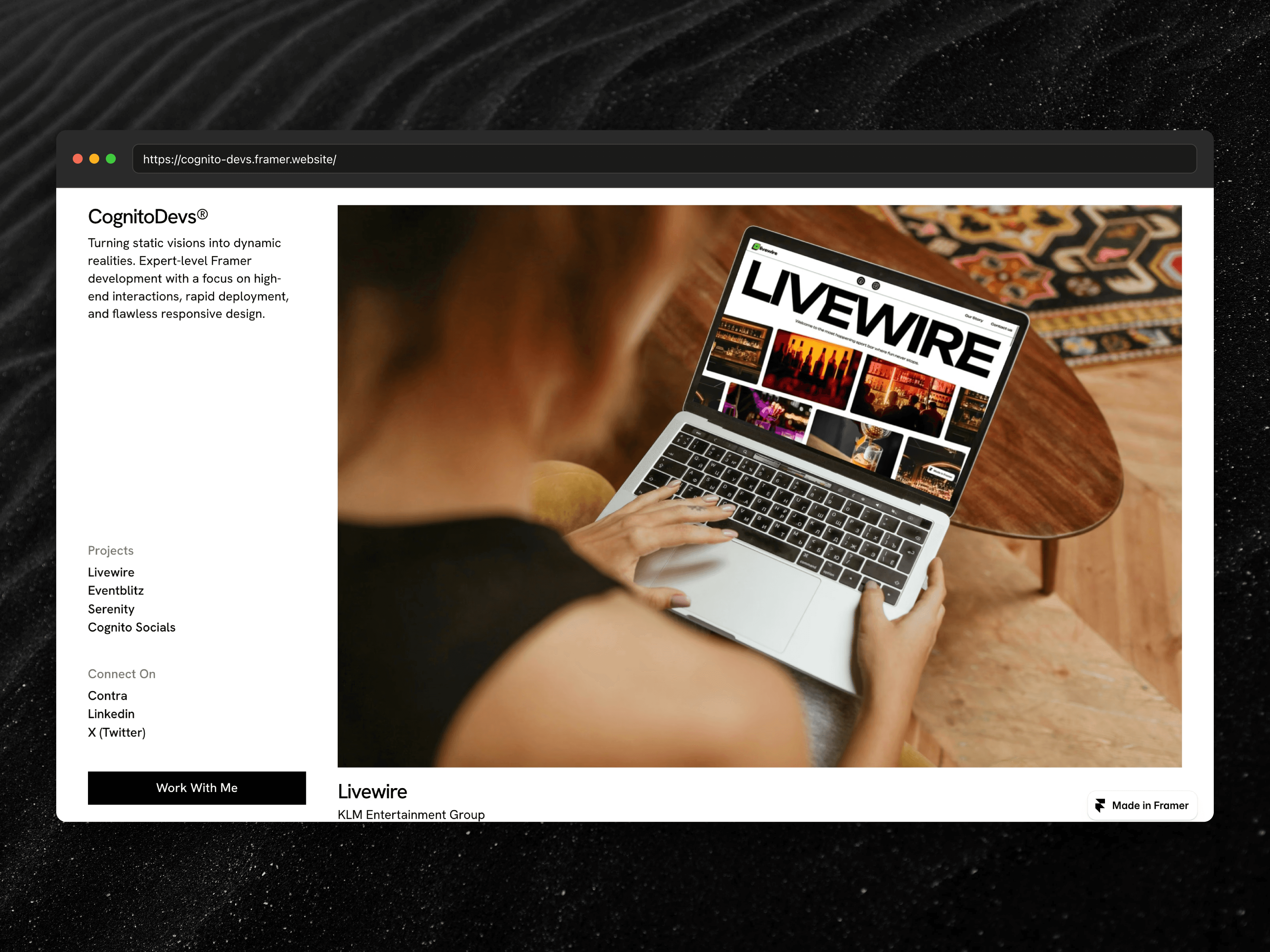
CMS handles the content layer. Campaign pages, service offerings, team profiles — all editable from a dashboard. The design stays locked, the content changes when it needs to.
What still reads as AI-generated?
"in the actual sense of the word" is slightly self-conscious
"the site has a personality" is vague
"signal premium without announcing it" is a bit try-hard
Paragraph rhythm is still fairly uniform — one idea per paragraph, same pace throughout
Final version:
The type is large. That's the first thing anyone sees and the point of the whole template. A headline that owns the screen tells visitors something about the agency before they've read a word — that you're not hedging, not decorating, not saving the real message for a scroll down.
The 3D effects have restraint. Depth on scroll, layers that separate as you move through sections, a few elements that respond to cursor position. None of it requires a warning or a loading bar. It's the kind of thing you notice on the second pass, not the first — which is where it belongs.
Page transitions make the site feel like it has somewhere to go. Not a dissolve, not a hard cut — something in between that gives each page a moment to arrive. Three or four of those and the whole browsing session has a different texture. That's what they're for.
Tickers show up in the right places. Client names looping below the fold. A services line moving across the footer. A stat that scrolls instead of sits. They keep the page moving between sections without adding noise. Premium sites tend to be in motion without being busy — this template understands that difference.
CMS runs the content. New campaign, updated service page, fresh team photo — handled from a dashboard, not a pull request. The layout doesn't shift when the content does. That's the whole deal.